

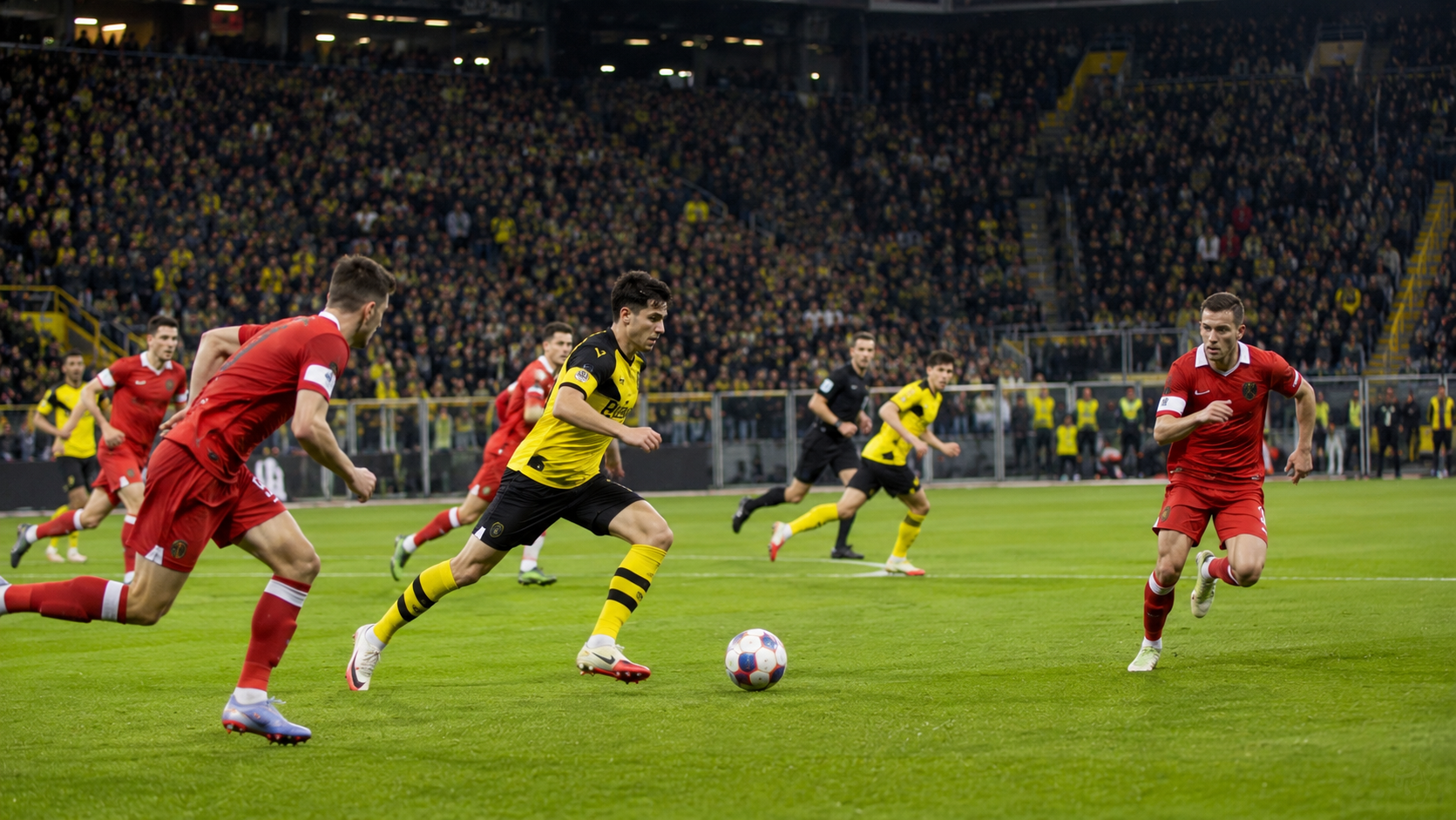
German football has developed a distinctive reputation for intensity, attacking ambition and an impressive ability to turn defensive situations into dangerous opportunities. The Bundesliga brings together clubs with different traditions and playing philosophies, but many of its most compelling encounters share one characteristic: the action rarely remains static for long. Teams press aggressively, move forward with purpose and look for opportunities to exploit even the smallest gap in an opponent’s formation. For supporters who want to understand how these fast-moving contests unfold, матчи Бундеслиги в записи offer an opportunity to revisit the entire performance and discover the decisions behind its most exciting moments.
A Competition Defined by Energy and Initiative
The Bundesliga has become widely associated with proactive football. Rather than waiting passively for opponents to make mistakes, many German teams attempt to influence the match through movement, pressure and forward-thinking decisions. This approach can produce encounters in which possession changes quickly and both sides are constantly searching for ways to attack.
However, the league is not defined by one universal style. Some clubs prefer to build patiently from the back, using short passes to draw opponents out of position. Others rely on direct movement, quick combinations and aggressive runs into the spaces behind the defence. There are also teams that combine these approaches, changing their strategy according to the opponent and the circumstances of the match.
This diversity makes the Bundesliga particularly rewarding to follow in its entirety. A short highlight package may capture a spectacular goal or a rapid counterattack, but it cannot always explain how the opportunity emerged. The full match reveals the pressing movements, passing decisions and positional adjustments that made the decisive action possible.
It also allows supporters to recognise how quickly the balance of a contest can change. A team that appears comfortable in possession may suddenly face intense pressure, while an opponent that has spent several minutes defending can create a dangerous attack with only a few accurate passes.
Pressing as a Collective Responsibility
High pressing is one of the most recognisable features associated with German football. It involves more than a forward running towards a defender with the intention of winning the ball. Effective pressing requires an entire team to move together, close passing options and force the opponent towards areas where possession becomes difficult to maintain.
The first player to apply pressure usually determines the direction of the movement. His teammates must understand the intention and adjust their positions accordingly. One midfielder may close a central passing lane, while a winger moves towards the opposing full-back. Defenders advance to reduce the available space behind the pressing line.
When the coordination is successful, the opponent has very little time to make a decision. A rushed pass can be intercepted, and a poor first touch may create an immediate attacking opportunity.
Yet pressing also involves risk. If one player moves too early or a teammate fails to follow, gaps can appear between the lines. An opponent who manages to escape the initial pressure may suddenly find considerable space in front of him.
A complete match recording makes these situations easier to recognise. Viewers can see whether a team presses consistently, how it reacts when the first attempt fails and whether the players maintain their organisation throughout the game.
The Importance of the First Few Seconds After Possession Changes
One of the most exciting aspects of the Bundesliga is the speed at which teams can transform defence into attack. The moment possession changes often creates a temporary imbalance, as players who were attacking must reorganise and those who have recovered the ball can move into open spaces.
This is where quick decision-making becomes essential. A midfielder who wins the ball may have only a few seconds to identify a forward passing option. A winger can immediately begin a diagonal run, while a striker moves towards the space between two defenders.
The first pass after regaining possession can determine whether the counterattack becomes dangerous. If it is accurate and played at the right moment, the attacking team can advance before the opposition restores its defensive structure. If the decision is delayed, the opportunity may disappear.
These transitions also reveal the importance of teamwork. A successful counterattack is rarely the achievement of one player alone. It requires supporting runs, awareness of available space and the ability to make decisions at high speed.
Watching the entire match helps explain why certain teams are particularly dangerous after recovering the ball. Their effectiveness often comes from preparation and coordinated movement rather than simply having fast attackers.
Young Players and the Culture of Development
One of the Bundesliga’s important strengths is the attention many German clubs give to developing young footballers. Academy systems provide opportunities for talented players to improve their technical abilities, tactical understanding and physical readiness before progressing towards senior football.
The transition from youth competition to the first team is demanding. Young players must adapt to greater physical intensity, faster decision-making and the expectations of professional football. They also need to learn how to perform consistently when facing experienced opponents.
This development can be observed in the way young footballers are introduced into competitive matches. Some receive opportunities gradually, entering games as substitutes before becoming regular starters. Others establish themselves quickly because their technical qualities and tactical understanding suit the team’s playing philosophy.
Full-match viewing provides a useful perspective on their progress. It allows supporters to look beyond a goal or a successful dribble and examine how a young player behaves throughout the contest. Does he maintain concentration when the team is defending? Can he make sensible decisions under pressure? Does he continue to offer support after an unsuccessful attacking move?
These details are important because development is rarely a straight line. A promising player may produce an excellent performance one week and struggle in the next. Following complete matches makes it easier to appreciate the process behind a footballer’s growth.
The Role of Physical Preparation
The intensity of professional football places considerable demands on players. Repeated sprints, sudden changes of direction, physical challenges and continuous movement require a combination of endurance, strength and coordination.
Physical preparation is not simply about running faster or covering more distance. Players must be able to perform technical actions accurately even when tired. A midfielder who has spent much of the match pressing opponents still needs to make intelligent passing decisions late in the game. A defender must maintain concentration when his physical energy begins to decline.
This relationship between fitness and decision-making is particularly important in fast-paced matches. Fatigue can affect positioning, reaction time and communication. A team that has maintained a high pressing intensity for most of the contest may eventually need to adjust its approach.
Substitutions can help manage these demands. Fresh players may restore energy to the attacking line, strengthen midfield coverage or provide additional speed during counterattacks. The timing of these changes often depends on how the match has developed.
A full recording reveals the physical rhythm of the game. It shows when a team begins to lose intensity, which players continue to influence the action and how managers respond to changing conditions.
Stadium Atmosphere and the Identity of German Clubs
The Bundesliga is also recognised for the relationship between clubs and their supporters. German football culture places considerable importance on matchday traditions, local identity and the atmosphere created inside stadiums.
Supporters contribute to the emotional rhythm of a fixture. Their reactions can intensify after a successful challenge, encourage a team during a difficult period or transform the atmosphere following a late goal. Even moments without direct action can become memorable because of the collective anticipation inside the stadium.
Different clubs have their own traditions and ways of expressing their identity. Some are associated with historic industrial cities, while others represent smaller communities with a particularly strong connection to their local team. These backgrounds influence the character of the competition and give individual fixtures a significance that extends beyond the league table.
Watching a full match allows viewers to experience more of this atmosphere. The opening minutes, the response to a missed opportunity and the tension of the final stages all contribute to the emotional character of the occasion.
Technology Is Transforming Football Analysis
Technology now plays an important role in the preparation and evaluation of Bundesliga matches. Video analysis helps coaching teams examine pressing structures, defensive distances and attacking patterns. Tracking systems provide information about player movement and physical workload, allowing clubs to assess how effectively their teams maintain intensity.
Data analysis can also help identify recurring situations. Coaches may examine where possession is most frequently lost, which passing routes create the greatest danger and how successfully a team recovers the ball after an unsuccessful attack.
Technology has influenced the spectator experience as well. Modern broadcasts offer multiple camera angles, slow-motion replays and additional statistical information. Video review systems give officials tools to reconsider certain decisions, while digital platforms make recorded matches easier to revisit.
For supporters, these developments create opportunities to understand the game in greater depth. A second viewing can reveal how a pressing trap was organised, why a defensive line moved forward or how an attacking move developed before the final pass. Technology provides additional perspective without removing the unpredictability that makes football exciting.
Managers and the Art of Changing Momentum
The Bundesliga’s fast-moving style places significant demands on managers. They must prepare their teams for different opponents while remaining ready to adjust their approach when the original plan becomes ineffective.
A manager may begin with an aggressive pressing strategy but decide to defend more compactly after the opponent repeatedly escapes pressure. Another may introduce an additional midfielder to improve control of possession or move a winger closer to the striker to increase the attacking threat.
These decisions are influenced by the scoreline, player performance and the amount of time remaining. A team protecting a narrow advantage may prioritise defensive stability, while one chasing a result must accept greater risks.
Substitutions are an important part of this process. A fresh attacker can create new problems for tired defenders, while a technically skilled midfielder may help the team maintain possession during the closing stages. The success of a change depends not only on the individual player but also on how the rest of the team adapts.
A full match makes these managerial decisions easier to evaluate. It shows the problems that prompted a change and whether the adjustment improved the team’s performance.
Why the Full Match Tells a Different Story
The Bundesliga’s appeal lies in its combination of speed, technical quality, collective effort and emotional intensity. Its most memorable moments often develop through several connected actions rather than appearing without warning.
A spectacular goal may begin with an interception, a coordinated pressing movement and an accurate forward pass. A decisive save may be the result of a defensive mistake several seconds earlier. A late winner can reflect the work of substitutes who changed the attacking rhythm during the final period.
Highlights provide a convenient summary, but a complete match offers a much broader understanding. It allows supporters to follow the development of tactics, recognise the importance of physical preparation and appreciate contributions that rarely receive attention.
German football continues to evolve, with clubs combining established development traditions and modern approaches to performance analysis. Its matches offer different interpretations of how football can be played, from aggressive pressing to carefully organised possession and rapid counterattacks.
For those who want to understand the competition beyond its most spectacular incidents, recorded matches provide a valuable perspective. The full ninety minutes reveal the teamwork, preparation and individual decisions that make the Bundesliga such an engaging part of European football.